
How do you actually find psychotherapy if you can’t make phone calls?
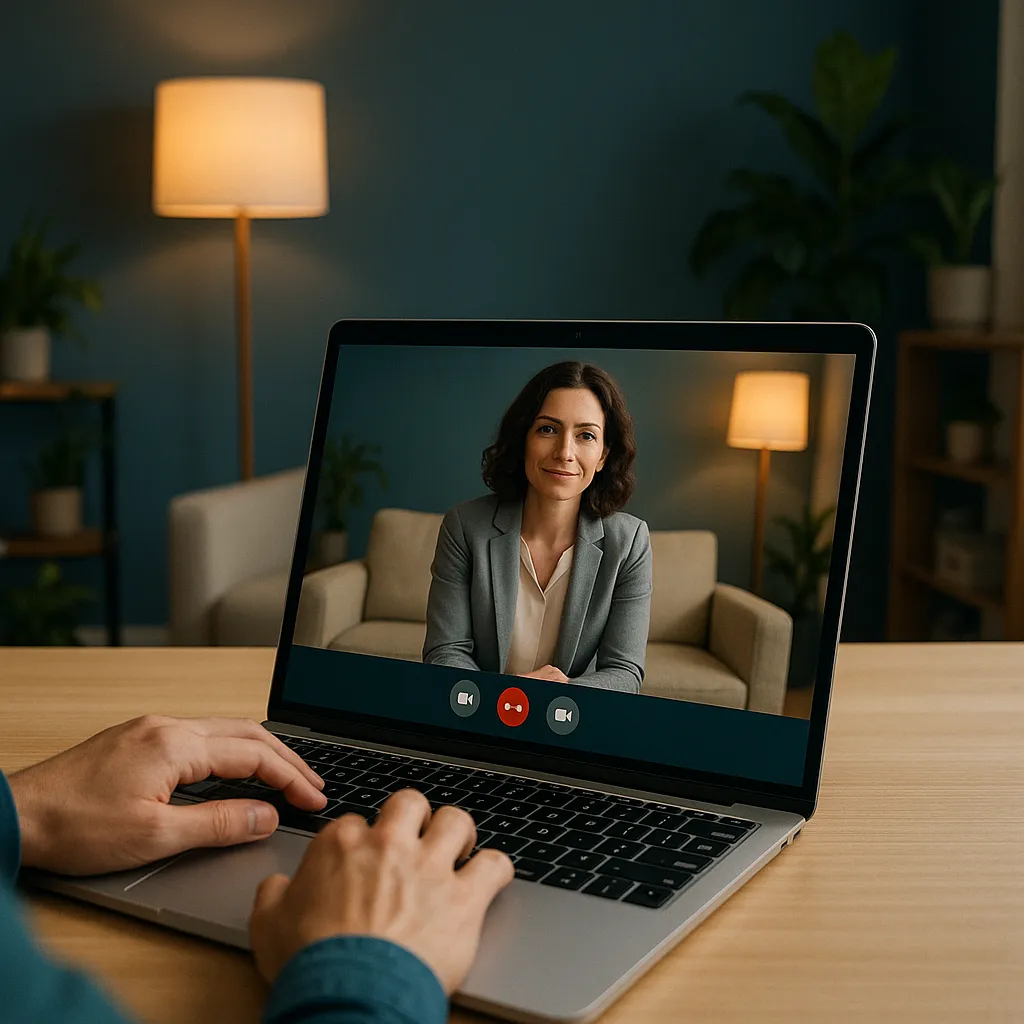
Barrier-free paths to psychotherapeutic help — even without a call
“Yet another psychotherapy practice that’s only reachable by phone between 2:15 and 3:00 p.m.” Do you know that? You know psychotherapy would help you, but the mere thought of calling various therapists already leaves you exhausted. Very understandable.
It’s not because you’re not motivated. On the contrary — often it’s precisely the people who can’t make phone calls who are most urgently seeking help. But the system sometimes seems not to be made for everyone.
Hmm, there’s this guy in your head telling you: “If you can’t even make a call, you’re probably not ready for therapy.” Nonsense. Absolute nonsense. There are indeed ways to access psychotherapy without classic phone calls.
Why making calls is sometimes impossible
First of all — it’s completely okay if calls are an insurmountable hurdle for you. Social phobia, depression, states of exhaustion, autism-spectrum conditions or physical limitations can mean that phone calls are simply not feasible. Sometimes a single call costs so much energy that nothing else works for the rest of the day.
We understand that. And that’s exactly why access to therapy shouldn’t fail because of it.
The path via digital channels
Many therapists now offer alternative ways to get in touch. Email is often the first step. Write a concise email briefly describing your situation. Be sure to mention that phone calls aren’t possible for you — most therapists understand that immediately. But please — no novel. We’ll discuss the details in the conversation.
In our practice we handle it like this: we need your contact details, a brief description of your difficulties and a note that you can’t make phone calls. Then we can arrange an online consultation directly. No phone calls needed.
Signal Messenger as a bridge
Some therapists also offer chat contact via secure messengers like Signal. That can be a good intermediate step — you can write at your own pace without having to jump straight into a video call. However, this is more for the initial arrangements, not for the actual therapy.
The online consultation as an entry point
This is where it gets interesting: a psychotherapeutic consultation can easily be carried out online. In our view, moving images are required — pure phone calls or written histories are, in our view, not permissible. But that’s a good thing, because in a video conversation we can get a much better picture.
It’s often the case that the first step — the video conversation — feels less threatening than a phone call. You’re in your familiar surroundings, can end the conversation at any time, and still have direct contact.
If you’re still unsure
“But what if I also feel uncomfortable in the video conversation?” A completely understandable concern. Here may I ask something — wouldn’t it be worth a try? You can prepare everything beforehand, write down bullet points, and if it really doesn’t work, that’s okay too.
Sometimes the first step is the hardest. And sometimes you find it wasn’t as bad as feared.
Practical steps for your search
Look on therapists’ websites for email addresses or contact forms. Write an honest but short email about your situation. Most therapists reply within 48 hours.
If a practice only offers phone contact, write an email anyway. Explain your situation — solutions can often be found here too.
Why this works
From a neurophysiological perspective, it’s entirely understandable that different people prefer different communication channels. Some need the visual component, others the calm of writing. One isn’t better than the other — it’s simply different.
The only important thing is: don’t let yourself be discouraged. Your wish for help is justified, no matter which channel you use to get in touch.